
High-Performance Injection Molding Tools: Engineering for High-Volume Tool Life

Updated: 4 days ago
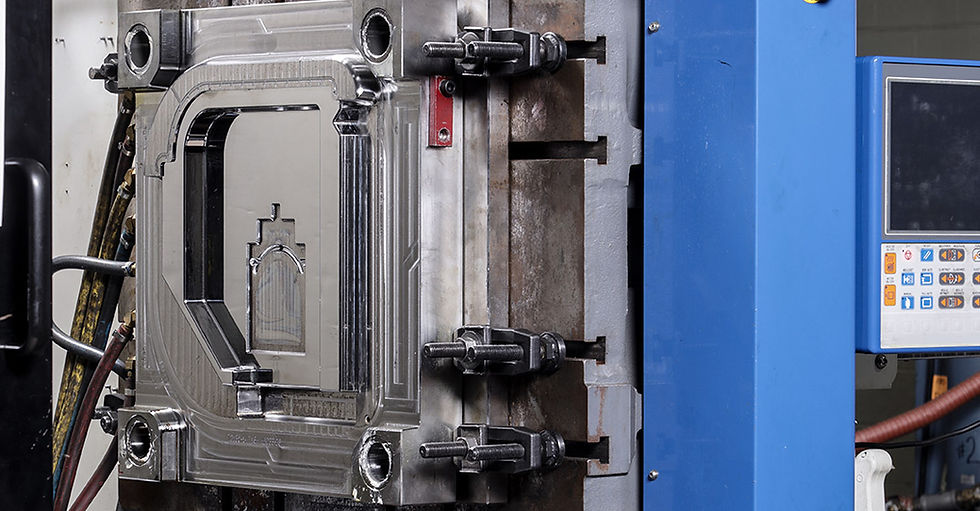
Ask any veteran engineer, and they’ll tell you: the ultimate quality of your plastic product doesn't even begin in the molding machine. It starts much earlier, with the relentless, magnificent precision of the injection molding tooling—that complex steel structure we simply call the mold. It is the master template, capable of faithfully reproducing your component flawlessly, millions of times over.
Think of the mold as the heart of your entire project. If it fails, your whole line stops. If it's flawed, every single part you produce is flawed. Without a robust, expertly crafted tool, you can forget consistency, efficiency, and accurate tolerance. The mold dictates everything: cost, cycle speed, and the final, beautiful quality of the part itself. At Moraine Plastics, we treat this tool-making stage as sacred ground. This is our deep dive, revealing precisely why expert design and rigorous tool fabrication are the absolute prerequisites for success.
Key Takeaways: Injection Molding Tools
The mold, not the press, determines the quality, cost, and consistency of the final plastic part. Investment in robust tooling is an investment in certainty.
The choice of metal (e.g., P20, H13 Tool Steel, or Stainless Steel (420SS)) must be compatible with the plastic resin, especially when dealing with abrasive or corrosive materials, to guarantee tool longevity.
Achieving tight tolerances requires expert tool fabrication using advanced techniques like EDM, coupled with strict adherence to Design for Manufacturability (DFM) principles from the start.
The injection molding tool production strategy hinges on selecting the right tool type: single-cavity molds for low volume/prototyping or multi-cavity molds for high-volume, cost-efficient production.
High-Volume Injection Molding Tooling & SPI Class Specs
The first strategic choice you face is selecting the right tool type. Get this decision wrong, and your production costs are guaranteed to balloon.
Single-Cavity Molds: These are your simple, economical entry point. They crank out one part per cycle, making them ideal for exceptionally large components, lower-volume runs, or the initial, essential prototyping phases. Simple means quicker changeovers and minimal maintenance hassle. For a complete comparison of prototype vs. multi-cavity part layouts, explore our guide on injection molding tool options for plastic parts.
Multi-Cavity Molds: This is the tireless engine of high-volume manufacturing! They churn out multiple identical components—we’re talking 8, 16, or even 32—in a single shot. This structure drastically lowers the cost-per-part and dramatically accelerates throughput. Essential, truly essential, for high-demand automotive or consumer applications.
Family Molds: These are your sophisticated multitaskers. They are engineered to mold several different components required for a single finished assembly (a housing, a key, and a seal, for example) all at once. While brilliantly efficient, they require intensive design to ensure balanced material flow and uniform cooling across parts of differing volumes.
Insert Molds: These are specialized, vital tools. They allow us to integrate metal components, threaded inserts, or other pre-formed parts directly into the plastic structure during the injection cycle. The result? A single, exceptionally durable, multi-functional unit, a necessity in sensitive electronics.
Selecting Hardened Tool Steel Grades (P20, H13, 420SS)
The raw metal used in the mold determines everything: its lifespan, its cost, and its capacity to manage extreme thermal cycling. This is a strategic decision that pits upfront investment against the tool's expected durability and long-term cycle time.
Tool Steel
The majority of production tools you see running reliably day-in and day-out are built from hardened Tool Steel, classified meticulously based on its durability and heat resistance:
P20 Steel: Consider this the manufacturing sweet spot, the reliable friend. P20 provides a superb balance of cost and durability, suitable for high-quality production tools expected to run into the hundreds of thousands of cycles (up to half a million).
H13 Steel: When you need a tool to practically last forever—or mold tricky, highly abrasive plastics—you must move to H13. It is chosen for its extreme thermal stability and resistance to abrasion. This is mandatory for ultra-high-volume tools running millions of cycles where the steel must survive massive, repeated pressures and rapid temperature shifts over a decade or more.
Specialty Alloys and Metals
Stainless Steel (420SS): You need this whenever corrosion is a factor. This steel is typically employed for demanding medical or food-grade applications, or when processing chemically aggressive plastic resins like certain PVC formulations.
Aluminum: Though softer and limited to low-to-medium volumes, aluminum has one incredible advantage: thermal performance. Its exceptional heat transfer rate allows the plastic to cool dramatically faster, instantly slashing the cycle time and boosting production speed when high-volume durability isn't the primary concern.
Engineering Tool Steel for High-Performance Tool Life
The moment we move from design concept to tool fabrication, we are applying physics—pure, intense, applied physics. The mold must be aggressively engineered to anticipate and manage every single variable of the injection process. The design phase is, without question, the make-or-break moment.
Geometry and Complexity (DFM): Every project begins with Design for Manufacturability (DFM). Think about complex features—undercuts, internal threads, or holes perpendicular to the main pull. These demand intricate, moving mold actions like hydraulic slides, side-pulls, or sophisticated collapsible cores. The DFM phase simply ensures the part can be cleanly ejected!
Material Selection and Compatibility: This factor is often overlooked during the design phase, but it's critical. The plastic resin you choose (e.g., Nylon, ABS, Polycarbonate) directly affects the required properties of the tool steel. A corrosive plastic requires Stainless Steel (420SS) to prevent premature tool pitting. A fiberglass-filled resin, which is highly abrasive, demands that the tool steel be hardened (like H13) to prevent the high-speed wear that destroys dimensional accuracy. The two materials must be compatible for the long haul.
Tolerance and Dimensional Accuracy: The required tolerance of the final plastic part must dictate the precision of the injection molding tools themselves. Holding ultra-tight tolerances (say, ±0.002 inches) requires advanced machining techniques like Electrical Discharge Machining (EDM) and continuous, climate-controlled inspection using CMMs. This is the difference between a part that clicks perfectly into an assembly and one that causes immediate line stoppage.
Here is the reality of the investment:
"If you try to save 10% on your tooling, you are likely guaranteeing yourself 50% more headaches and failure down the line. A truly good mold is the most expensive thing you buy, and it is the only thing you buy that pays you back over its lifespan." — Gerry Ford, Owner, Moraine Plastics
Surface Finish Requirements: Finally, never forget the surface. The tool's internal finish is perfectly mirrored onto the part. Whether you need a highly polished surface for optical clarity or a textured matte finish for ergonomics, this requirement dictates the final treatment and polishing phase of the tool fabrication process.
Injection Mold Tooling Manufacturing Process
The transition from a blueprint on a screen to a physical, working tool is a highly meticulous and structured process:
Design Phase: We finalize the 3D mold design, incorporate all DFM notes, and run complex computer simulations of plastic flow.
Tool Fabrication: High-speed CNC milling and precision EDM cutting are employed to sculpt the core and cavity inserts out of the hardened steel.
Tooling Assembly and Inspection: All components—the core, cavity, ejector systems, cooling lines—are expertly assembled. Rigorous inspection ensures every dimension is perfect before the power is even turned on.
Prototyping and Testing (T1): The mold’s initial test run begins the formal qualification process, proving that the part meets every specification before high-volume production can be approved.
Moraine Plastics controls this entire, detailed lifecycle through close partnerships with established, high-precision tool shops, maintaining absolute oversight of the quality of the final injection molding tools.
In Conclusion
The mold is, unequivocally, the single largest strategic investment in any plastic injection project. Invest in certainty and repeatability. Whether you need a simple single-cavity mold for quick validation or a complex multi-cavity mold built from top-tier H13 tool steel, tooling quality is the core difference between success and costly failure.
Don't let your critical project be hampered by an inferior mold. Contact Moraine Plastics to start discussing your custom injection molding tooling needs today.
Frequently Asked Questions (FAQs)
Why are injection molding tools so expensive?
Tooling represents the largest upfront investment because the molds are highly complex, precision-engineered components built to withstand extreme heat and pressure over millions of cycles. The cost reflects the time spent on specialized design (DFM), the high price of premium materials (Tool Steel, H13), and the expensive, high-tolerance machining required during tool fabrication (CNC milling, EDM). A cheap tool will almost always lead to expensive product defects and production downtime later.
What is the lifespan of a typical injection molding tool?
The Plastics Industry Association (formerly known as the Society of Plastics Industry or SPI mold classifications) has mold standards categorized into five classifications. The lifespan is highly dependent on the mold material and the plastic resin being used:
Aluminum Tools: Typically 5,000 to 100,000 cycles (for prototyping/low volume).
P20 Tool Steel: Typically 250,000 to 500,000 cycles (for high volume production).
Hardened H13 Steel: Can run well into the millions of cycles, making it the choice for demanding, ultra-high-volume, long-term programs.
What is a "Family Mold" and when should I use one?
A Family Mold is a type of multi-cavity mold that produces different parts for the same assembly in a single shot (e.g., a lid and a container). You should use one when all the related components share the same resin, color, and texture requirements, and their individual volumes are balanced. It saves time but requires more complex initial design to ensure balanced filling and consistent quality across all components.
How does material selection affect the required tool steel?
The plastic material directly determines the required tool steel hardness and corrosion resistance. For example, plastic resins containing abrasive fillers (like glass fiber) demand hard steels like H13 to prevent wear, which would quickly destroy dimensional accuracy. Conversely, highly corrosive resins (like certain PVCs) require Stainless Steel (420SS) to prevent chemical pitting and corrosion inside the mold cavity.

