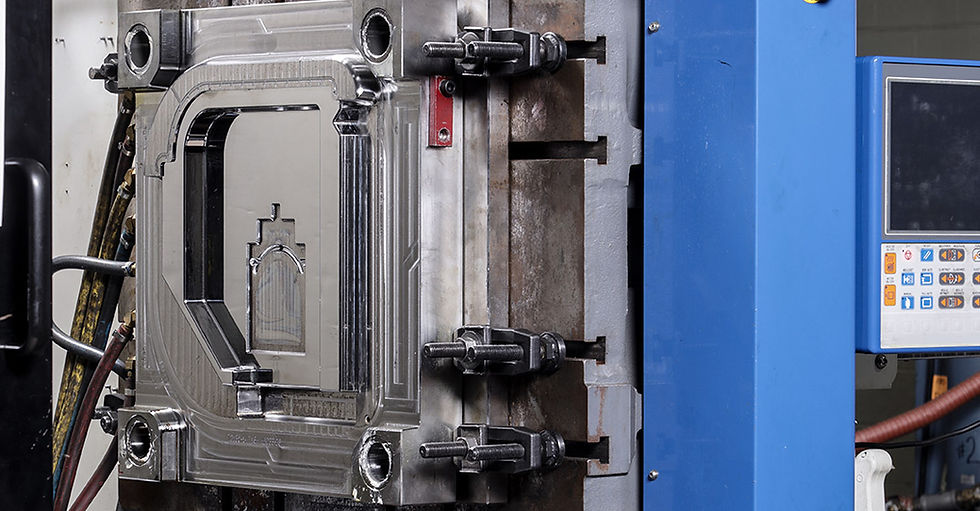
The Engineering Approach to Injection Mold Tool Transfer Services
- MP Webmaster

- Aug 11
- 2 min read
Updated: 6 days ago
Pulling an active production tool from an incumbent molder's facility is pure stress for an OEM. Whether you are dealing with molding defects, unannounced price hikes, or a molder who simply cannot hit dock dates, resourcing a mold feels like a massive risk. What if the mold is damaged in transit? What if the new shop can't get the part back into dimensional spec? Those fears can keep supply chain managers trapped with under-performing suppliers for years.
It doesn't have to be a gamble, though. Partnering with a domestic molder experienced in injection mold tool transfer services lets you reposition your assets, eliminate quality fade, and stabilize your supply chain without dropping six figures on a brand-new tool build.
Why OEMs Pull Tooling
Supply chain directors rarely yank a tool on a whim. The decision usually comes after months of continual operational dissatisfaction:
Persistent Part Defects: Sink marks, warping, or flash that the molder blames on "tool wear" instead of their own unstable molding process.
Press Capacity Bottlenecks: Your molder ran out of machine time or labor, turning their problem into your line-down emergency.
Lack of Engineering Support: You ask for process data, inspection sheets or lot tracking, and you get radio silence.
Reshoring Delays: Ocean freight headaches, production delays, and unnecessary buffer inventories inherent with overseas sourcing.
Our 4-Stage Tool Transfer Protocol
You don't fix a failing tool by dropping it into a new press and hoping for the best. You fix it with rigorous engineering baseline checks before the mold ever clamps shut.
1. Pre-Transfer Audit
We start before the mold is tranferred. Our transfer team reviews the part files, resin spec sheets, quality logs, and historical maintenance records. If the tool is coming across the ocean, we verify export packaging to make sure molding surfaces and mechanical components are secure and greased.
2. Evaluation of Tool Condition
When a transfer mold arrives at our Wisconsin plant, it is completely disassembled on the bench. We inspect for cavity damage, mechanicl function, cooling efficiency and adherence to SPI standards. Any needed rework or corrections are addressed prior to the initial mold tryout.
3. Process Development
We never just copy the previous molder's processing sheet. Our technical team will run viscosity curve studies, gate seal tests, and thermal mapping using established decoupled molding techniques to optimize the molding process.
4. Confirmation of Compliance
Our quality team will conduct a First Article Inspection to verify dimensional compliance, and a Capability Analysis to ensure process stability. Results are documented using the standardized Production Part Approval Process (PPAP).
Take Back Control of Your Production
Moving an active injection mold isn't just an emergency fix—it's a chance to upgrade your entire supplier relationship. By entrusting your tools to a technical Midwest molder, you will get compliant parts, reliable dock dates, and a stable domestic supply chain.
If a struggling vendor is putting your shipments at risk, explore our reshoring solutions, review our capabilities, or contact our engineering team today to start a confidential tool evaluation. You can also consult the PLASTICS Industry Association for standard tool ownership guidelines.